Sandoz v Bayer [2024]
By Benjamin MacVean
Published
Topic
Case Summaries
See
Disclaimer: Views expressed herein are solely those of the author and do not necessarily reflect the views of other writers or the Law Student Review
Executive Summary:
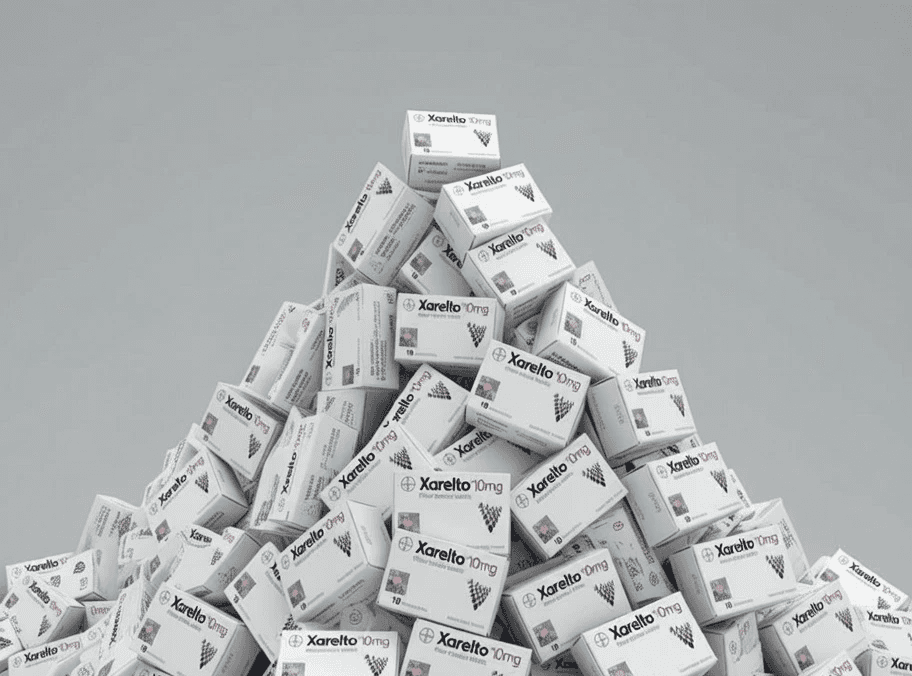
In successfully appealing to the Full Federal Court, Sandoz has revoked two Bayer follow-on patents for a treatment using rivaroxaban, trading under the name Xarelto. The Court held that the follow-on patents were obvious in the light of Bayer’s original patent for rivaroxaban and clarified the test for inventive step in section 7 of the Patents Act 1990 (Cth) (‘Patents Act’).[1]
Judges: Yates, Burley and Downes JJ
Background:
Bayer has sold products comprising rivaroxaban (used to treat and prevent Deep Venous Thrombosis) in Australia under the trade name Xarelto. Bayer’s patent for rivaroxaban (international application WO 01/47919) expired in November of 2023. Additionally, Bayer has been, since 14 February 2023,[2] the exclusive licensee of the following patents:
1. Australian Patent No. 2004305226 – ‘Method for the production of a solid, orally applicable pharmaceutical composition’ (‘Patent 226’); and
2. Australian Patent No. 2006208613 – ‘Prevention and treatment of thromboembolic disorders’ (‘Patent 613’).
The Case:
Sandoz’ commenced proceedings against Bayer, seeking to have Patents 226 and 613 revoked to produce a generic version. Sandoz argued the following grounds:
That the inventions claimed in Patent 226 and Patent 613 were “obvious in the light of the common general knowledge together with International Patent Publication No. WO 01/47919 (‘WO 919’); and
That the inventions claimed in the 613 Patent were “obvious in the light of the common general knowledge together with Abstracts 3003, 3004 and 3010 published in the November 2003 supplement of the journal Blood (‘Blood Abstracts’)”.[3]
The primary judge found that both Patents were valid. However, their honours Yates, Burley, and Downes allowed Sandoz’s appeal, finding:
Section 7(3) of the Patents Act 1990 (Cth) does not require proof that a hypothetical skilled person would ascertain information, but rather, sufficient proof that the skilled person would do so on the balance of probabilities In light of this, the primary judge erred in finding a skilled person could not be reasonably expected to have ascertained international patent publication No. WO 01/47919 within the meaning of s7(3) of the Patents Act 1990 (Cth).[4]
The primary judge erred in finding that the inventions claimed in Patents 226 and 613 involved an ‘inventive step’ in the light of common general knowledge.[5]
A skilled person could not be led to the invention claimed in patent 613 because the invention was not simply the dosage regime. It also listed a chemical compound which without, a skilled person would not be led to the invention.[6]
Implications of the Decision:
When drafting a follow-on patent, a company should seriously consider what the inventive aspect of the follow-on patent is. This will assist the company to defend the validity of patents.
Footnotes
[1] Patents Act 1990 (Cth) s 7.
[2] Sandoz AG v Bayer Intellectual Property GmbH [2024] FCAFC 135, [2]-[3] (‘Sandoz v Bayer’).
[3] Ibid [4].
[4] Ibid [43]-[61].
[5] Ibid [89]-[106].
[6] Ibid [114]-[119].