Safeguarding the Public or Eroding Democracy? Post Bondi Gun Law Reforms
By Vaishnavi Padamti
Published
Topic
Legal Commentary
See
Disclaimer: Views expressed herein are solely those of the author and do not necessarily reflect the views of other writers or the Law Student Review
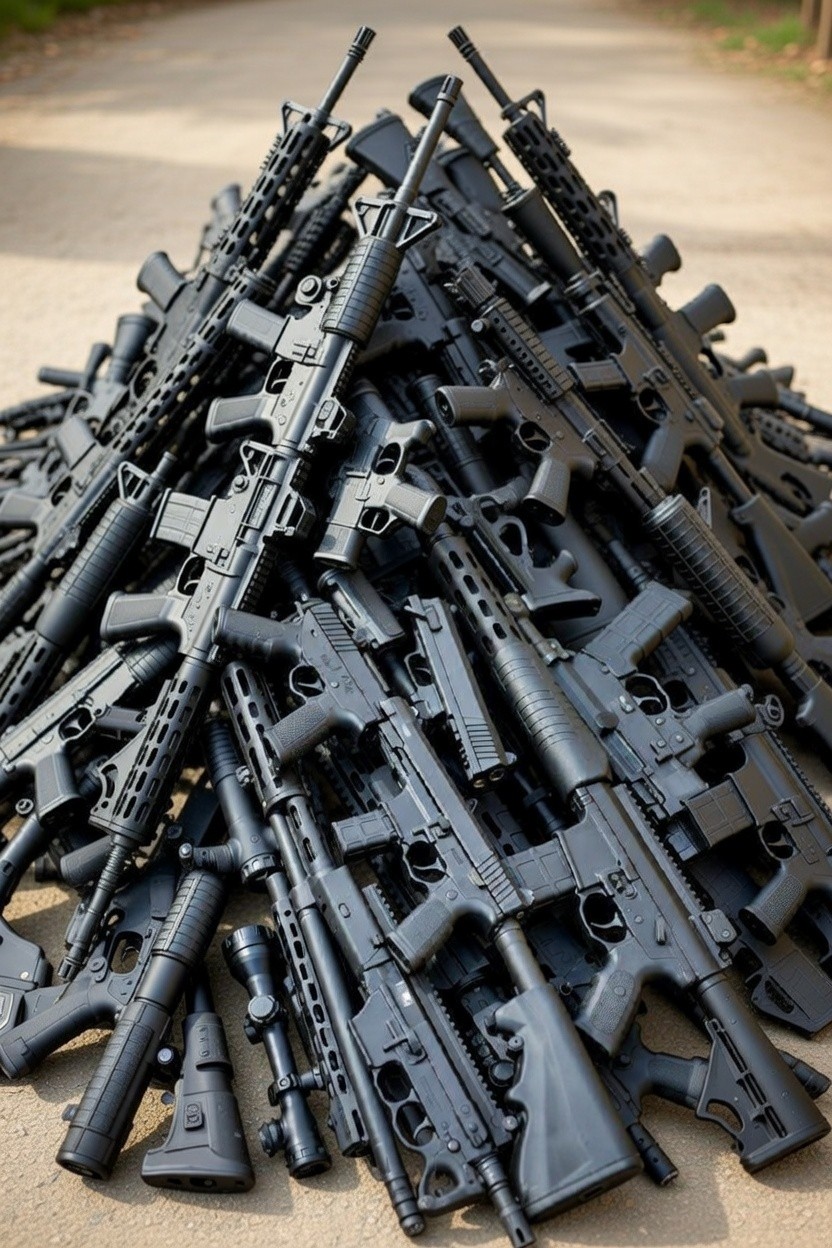
A. ABOUT GUN LAW REFORM
The new gun law reform refers to the changes in Australian legislation aimed at reducing firearm - related violence. This includes various changes to the law including minimum purchase age requirements, longer waiting periods, buybacks, background checks, various licensing rules, red flag laws, and bans on certain types of weapons which will be comprehensively discussed in this article. Australia’s firearm laws have been amongst the strictest in the world - however the recent firearm related violence triggered a new debate and legislative action, coercing the government to implement new legislation to protect the community.
B. CONTEXT AND HISTORICAL AMENDMENTS TO GUN LAW
The new firearm reform stems from the recent Bondi Beach attack in Sydney (Dec 2025) leaving many 15 dead and plenty of casualties, resulting in conversations across Australia about gun safety and firearm related violence. The incident took place in the early evening during a Hanukkah celebration attended by thousands of Jewish people. Two gunmen, Sajid Akram (father) and Naveed Akram (son) openfired on the crowd and also used a combination of explosives. This incident was swiftly declared a terrorism related offence and exposed significant concerns about the lawful use of firearms in Australian states and territories.
There have been previous amendments to the gun law in Australia, specifically the significant amendment made after the Port Arthur massacre at Tasmania in 1996 caused as a result of shooting (firearm related violence)[1]. Consequently, the government introduced the National firearm agreement (NFA) which tightened Australian gun laws[2]. The NFA established a uniform national framework for the regulation of firearms across jurisdictions. The legislation was an agreement which required all Australian states and territories to ban ownership of automatic and semiautomatic rifles. It further required gun owners to register firearms with the police and apply for licenses in order to own firearms. This specific amendment also initiated a buyback programme that removed 650,000 weapons across Australia[3]. Following the initial buyback, further reform included the 2003 handgun buyback which assisted in retrieving tens of thousands of privately owned firearms[4]. Research indicates that two decades after the firearm reforms, there were no mass shootings and accelerated decline in firearm related deaths, particularly suicides.[5] Over time, the NFA has been reaffirmed by successive governments and remains as the foundation of Australia’s gun regime. Nevertheless, certain issues such as incomplete creation of NFA registers and inconsistent application of regulatory requirements across jurisdictions has prolonged[6].
C. NEW AMENDMENT & SCOPE
The new firearm reforms were announced by the Albanese government in December 2025 following the Bondi Beach attack. Although firearm law remains primarily within state and territory jurisdiction, the Commonwealth committed to fund a national buyback scheme and to reimburse gun owners who hand in surplus, newly banned or illegal firearms under tougher gun laws being proposed.[7] Mr Albanese said there were more than four million firearms in Australia, which is more than at the time of the Port Arthur massacre. "The terrible events at Bondi show we need to get more guns off our streets," he said.[8]
The firearm reforms introduce an extensive package of legislative measures aimed at strengthening and strictly regulating gun ownership. The reform includes capping and restricting the number of firearms an individual may own, generally limiting ownership to four firearms per individual[9]. Strict exemptions to this rule allow primary producers and sports shooters to hold up to ten firearms[10]. It also limits the type of firearms a person may own and regulates licensing requirements which have also been tightened by reducing the standard license terms from five years to two years[11]. This specific measure is further increased frequency of safety and suitability checks, and restrictions limiting firearm licences only to Australian citizens, with exemptions for New Zealand permanent residents engaged in primary production or security related roles. In addition, the reforms significantly enhance storage, oversight and compliance obligations through the requirement of mandatory safe storage inspections prior to acquiring a firearm. The expedient prevents any permit or license holder from acquiring a firearm unless the Commissioner is satisfied that the safe-keeping requirements are met and the authorised police are satisfied with the inspections conducted for this purpose[12]. Another mandatory requirement was that all firearms license holders must acquire gun club membership with the capacity for exemptions to be prescribed through vigorous regulation. Alongside these reformative changes, the government will further implement a range of practical measures, including disqualifying offences for firearms licences to encompass personal and domestic violence offences under the Crimes (Domestic and Personal Violence) Act 2007[13]. Another measure involves increasing the use of criminal intelligence in firearm licensing decisions and conducting a comprehensive audit of existing firearm licenses[14]. It further prioritizes higher risk cases and subjects license holders to extensive scrutiny upon reapplication every two years rather than the previous rule, which was only five years[15]. These measures are accompanied by a comprehensive gun buyback scheme, with the New South Wales government in partnership with the Commonwealth Government and the Australian Federal Police. The objective is to encourage gun owners to surrender surplus, newly banned or illegal firearms for destruction.[16]
D. PUBLIC AND POLITICAL RESPONSE
In the wake of the Bondi Beach terror attack, the public and political response to the proposed gun law reforms in Australia has been both broad and deeply contested. Whilst the Albanese government has portrayed reforms to be necessary in order to safeguard the public, significant backlash and political disagreement has emerged from both the Opposition and certain stakeholders.
Prime Minister, Anthony Albanese is facing some internal resistance from within the Labor Party as Hunter MP and Olympic shooter, Dan Repacholi have made statements strongly condemning the proposed reforms, as these recent changes, “unfairly target responsible, law-abiding firearm owners”[17]. Mr Repacholi, himself a licensed firearm owner, stated that he received more than a thousand emails following New South Wales Premier Chris Minns’s announcement to consider limits on the number of guns an individual can own.[18] Although Mr Albanese defended the reforms by drawing parallels to the Howard Government’s response to the Port Macarthur massacre in 1996, former Prime Minister John Howard cautioned against using gun reforms by warning Australians that this measure is merely a distraction from what he characterized as an underlying issue of rising antisemitism. Mr Howard further criticised these firearm policies as being used “to avoid a broader debate about the spread of hatred of Jewish people,” reflecting reflecting a broader political pushback[19].
The Coalition has similarly accused the government of using firearm reforms to distract Labor’s record on addressing antisemitism following Hamas’s October 7th 2023 attacks in Israel and subsequent rise of antisemitism incidents across Australia[20]. The opposition further asserted that the Coalition would offer a “sensible and proportionate examination” of firearm laws, the immediate parliamentary focus should remain on combating antisemitism and combating terrorism. One Nation Leader and the Shooters Union have expressed strong opposition to the reforms[21]. Shooters Union president Graham Park criticised the proposed buyback scheme as ineffective, arguing that the objective of this measure should be directed towards illegal firearms trafficking.[22]
Academic and expert commentary has expressed some concerns, including Stepehen Monterosso, warning Australians that despite the stricter regulation of lawful ownership of firearms, illicit trade of guns remains a significant challenge[23]. He further noted that firearms are often acquired through illegal channels rather than legal sources, specifically through motorcycle gangs and criminal organised groups, limiting the effectiveness of reforms[24]
There has been strong condemnation from gun owners, criticising the new reform claiming that it handicaps law abiding owners[25]. There has also been significant backlash from human rights groups and civil libertarians asserting that this reform deprives human rights and democratic freedoms[26].
Despite political resistance, the reforms have received substantial public support. Polling conducted following the Bondi Beach attack indicates that approximately 92 per cent of Australians support tightening firearm laws, with 44 per cent favouring a complete ban on the types of weapons used in the attack and a further 48 per cent supporting stricter licensing requirements[27]. Only 8 per cent of respondents indicated otherwise — that no changes should be made to existing firearm laws[28].
E. CONCLUSION
The post Bondi firearm reforms in Australia represent one of the most comprehensive attempts in recent history to strengthen gun laws, balancing the need to protect individual rights freedoms and protect the community. While the reforms introduce stricter licensing and mandatory gun buybacks has also sparked political debate and scrutiny from the public. While supporters argue that these measures are necessary to prevent future violence and reduce fire-arm related harm, opposition argues that these laws may unfairly erode democratic rights.
F. FOOTNOTES
[1] Brianna Morris‑Grant, Ahmed Yussuf and Luke Cooper, The PM Has Announced the ‘Largest’ Gun Buyback Since the Port Arthur Massacre: Here’s What We Know (ABC News, 19 December 2025) https://www.abc.net.au/news/2025-12-19/australia-gun-buyback-2025-explained/106162936
[2] Ibid
[3] Ibid
[4] Ibid
[5] University of Sydney, Australia 20 Years after Gun Reform: No Mass Shootings, Declining Firearm Deaths (23 June 2016) https://www.sydney.edu.au/news-opinion/news/2016/06/23/australia-20-years-after-gun-reform--no-mass-shootings--declinin.html
[6]Rod Campbell, Skye Predavec and Alice Grundy, Australian Gun Control: 29 Years After Port Arthur (The Australia Institute, May 2025) https://australiainstitute.org.au/report/australian-gun-control-29-years-after-port-arthur/
[7] ibid
[8] Maani Truu, Prime minister announces ‘largest’ gun buyback scheme since Howard era (ABC News, 19 December 2025) https://www.abc.net.au/news/2025-12-19/prime-minister-announces-national-gun-buyback-scheme/106162002
[9] ibid
[10] ibid
[11] ibid
[12] ibid
[13] Crimes (Domestic and Personal Violence) Act 2007 (NSW).
[14] ibid
[15] ibid
[16]NSW Government, NSW Government to introduce toughest gun law reforms in a generation (Ministerial release, 19 December 2025) https://www.nsw.gov.au/ministerial-releases/nsw-government-to-introduce-toughest-gun-law-reforms-a-generation
[17] Nathan Schmidt, ‘“Not the Answer”: Labor’s Dan Repacholi Pushes Back Against NSW Gun Reform Agenda’ (news.com.au, 19 December 2025) https://archive.vn/2025.12.19-011123/https://www.news.com.au/national/nsw-act/politics/not-the-answer-labors-dan-repacholi-pushes-back-against-nsw-gun-reform-agenda/news-story/509750639a03808dc04b6d6ae85a752d
[18] Ibid
[19] Sarah Martin, John Howard’s dog-whistle intervention in gun debate all but dashes any hope of meaningful reform (The Guardian, 17 December 2025) https://www.theguardian.com/australia-news/2025/dec/17/john-howard-dog-whistle-intervention-in-gun-debate-federal-reform-albanese-bondi-attack-ntwnfb
[20] Tom McIlroy, Australia launches biggest gun buyback in 30 years after Bondi beach terror attack (The Guardian, 19 December 2025) https://www.theguardian.com/australia-news/2025/dec/19/australia-gun-buy-back-bondi-beach-terror-attack-anthony-albanese
[21] Tom McIlroy, Australia launches biggest gun buyback in 30 years after Bondi beach terror attack (The Guardian, 19 December 2025) https://www.theguardian.com/australia-news/2025/dec/19/australia-gun-buy-back-bondi-beach-terror-attack-anthony-albanese
[22] Tom McIlroy, Australia launches biggest gun buyback in 30 years after Bondi beach terror attack (The Guardian, 19 December 2025) https://www.theguardian.com/australia-news/2025/dec/19/australia-gun-buy-back-bondi-beach-terror-attack-anthony-albanese
[23] Nathan Morris, Lucy Barbour and Clint Jasper, Calls for Gun Law Reform Clash with Gun Lobby Resistance (ABC News, 21 December 2025) https://www.abc.net.au/news/2025-12-22/gun-lobby-mobilising-thousands-to-fight-gun-reforms/106149156
[24] ibid
[25] Fernanda Dahlstrom, Changes to Gun and Protest Laws (NSW) (Blog Post, Go To Court, 2026) https://www.gotocourt.com.au/changes-to-gun-and-protest-laws-nsw/
[26] Ibid
[27] YouGov, Australians overwhelmingly support stronger gun laws following Bondi attack (YouGov Public Data, 22 December 2025) https://au.yougov.com/politics/articles/53777-australians-overwhelmingly-support-stronger-gun-laws-following-bondi-attack
[28] Ibid