Ripani v Century Legend [2024]
By Benjamin MacVean
Published
Topic
Case Summaries
See
Disclaimer: Views expressed herein are solely those of the author and do not necessarily reflect the views of other writers or the Law Student Review
Introduction
When marketing an off the plan development, how much leeway do developers have? Can buyers rely on artistic renderings of the development? Can developers exclude themselves from liability if the development turns out differently? These are the questions which confronted Mr and Mrs Ripani, after their dream apartment turned out quite differently to what they originally expected.
What Happened?
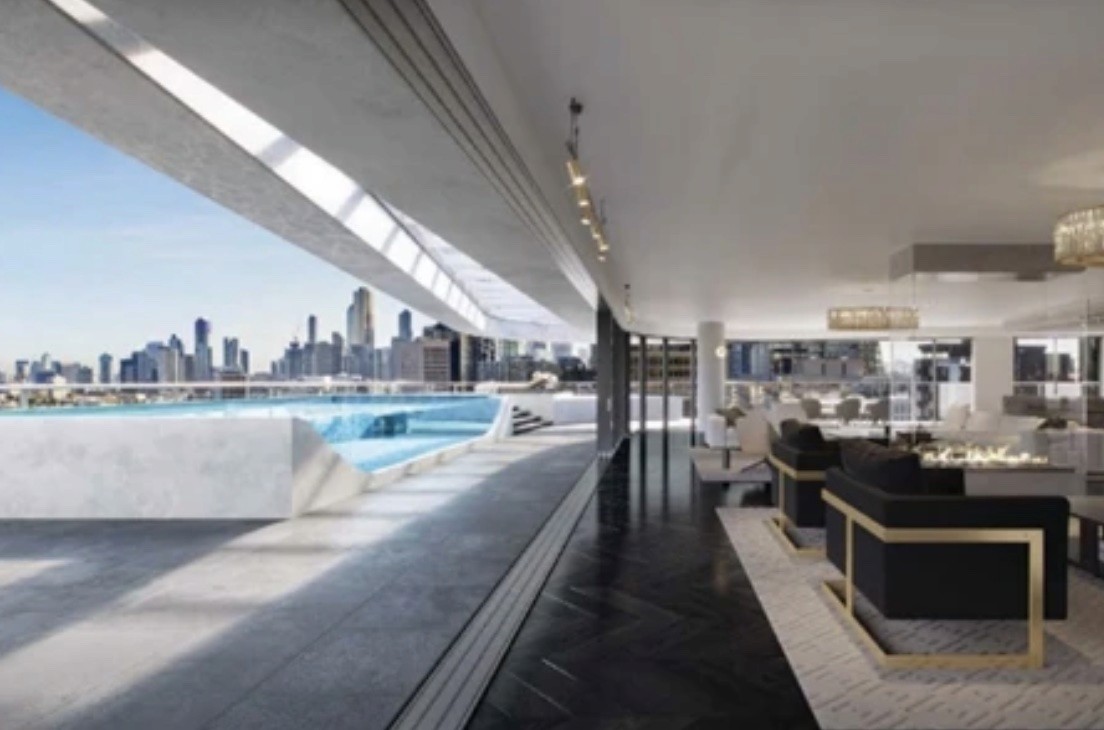
In 2016, Century Legend Pty Ltd (‘Century Legend’) prepared promotional materials for a proposed apartment building on Queens Road, Melbourne (‘the Victoriana Development’). One of the materials prepared (‘the Hero Render’) depicted a large open space, connecting the indoor entertainment area with the outdoor terrace. The Hero Render showed a seamless connection between the indoor and outdoor areas, and that both areas were on the same floor.In late 2016, one of Century Legend’s architects advised Century Legend that the renderings, including the Hero Render, could not be built as shown, and that the promotional material should be altered to reflect this. To rectify the issue, Century Legend attached the disclaimer “artist impression” to each of the inaccurate renders, instead of creating new renderings.
Mr and Mrs Ripani (‘the Ripanis’) became interested in purchasing an apartment in the Victoriana Development in early 2017. The Ripanis attended a showroom, which displayed the promotional material developed by Century Legend, including the Hero Rendering. The Ripanis were attracted by the depictions and decided to contract with Century Legend to purchase an apartment on the 14th story for $9.58 million, in late 2017.
Issues arose when, in 2019, the Ripanis were told that the opening between the indoor and outdoor areas could not be twelve meters, as originally requested. Instead, the Ripani’s weretold the opening would be no wider than 3.4 meters. Additionally, there would be a step between the indoor and outdoor areas. The Ripanis wrote to Century Development, complaining that they felt misled by the promotional materials, and that the depictions were the only reason they entered the contract. They intended to not proceed with the purchase.
Proceedings In The Federal Court
The Ripanis brought proceedings against Century Legend, alleging that Century Legend made misleading or deceptive representations within the meaning of section 18 of the Australia Consumer Law,1 and Common Law.
In the first instance, Anastassiou J found in favour of the Ripanis. He held that:
The renders were misleading because they represented a free opening and
seamless transition between the two areas. Century Legend did not have reasonable
grounds to make this representation.
The Ripanis relied on the representations at the time they entered the contract.
The Ripanis would have never entered the contract had they believed the renderings
were incorrect.
The words “artist impression” may sometimes be read as a disclaimer, however in these circumstances, the words did not cure the misrepresentation. This is because the key elements of the render were misrepresented.
Even though the Ripanis were considered as sophisticated buyers, this did not preclude them from being incapable of being misled.
The brochure’s disclaimer was ineffective because it may be regarded as indicative
only, and the renders were not indicative because the width of the opening was not
correctly depicted.
The agent was not responsible for the misleading and deceptive behaviour of the
developer, because the agent was unaware the developer knew the promotional
material was incorrect.
Century Legend appealed the decision to the Full Court of the Federal Court. The Full Court allowed the appeal on the first ground, which was:
That the primary judge erred in rejecting Century Legend’s evidence that its architect informed the Ripani’s, prior to their entering into the Contract, that the opening could not be constructed as the rendering depicted.
Markovic J, Mcelwaine J, and McEvoy J of the Full Court ordered a new trial, limited to assessing whether the Ripanis relied on misleading and deceptive conduct between April and August 2017.
The New Trial
In the new trial, Neskovcin J found in favour of the Ripanis. Neskovcin J held that the Ripanis did in fact rely on misleading and deceptive representations by Century Legend, entitling them to relief.
Neskovcin J ordered that the parties provide a proposed minute of orders that would give effect to the Courts reasoning, and orders and costs be determined in an upcoming management hearing.
Key Takeaways
This case should remind Developers how important publishing accurate promotional materials, especially in off the plan developments. Developers must ensure that, if they become aware of substantive changes that change the use or enjoyment of a lot, that they immediately convey this information to potential purchasers. Additionally, promotional materials which become inaccurate must be reviewed and updated.
Procedural History: Relevant Orders
18 March 2022 | Ripani v Century Legend Pty Ltd [2022] FCA 242
A. Rescission of the Contract.
B. Respondent to Pay Damages, Pre-Judgement Interest, and Costs of &
Incidental to the Proceedings to the Applicants.
25 March 2022 | Ripani v Century Legend Pty Ltd (No 2) [2022] FCA 289
Ordered an extension to the time limit of Order 2 to 28 March 2022.
30 November 2022 | Century Legend Pty Ltd v Ripani [2022] FCAFC 191
A. Granted the Appeal
B. Set aside orders from previous proceedings
C. Ordered a new trial, limited to the question: did the respondents continue
to rely on the misleading and deceptive conduct of the appellant
18 July 2023 | Ripani v Century Legend Pty Ltd (No 3) [2023] FCA 812
A. The new trial ordered by the Full Court to be limited to the following:
A. Did the Ripanis continue to rely on truth of the Representations
when the Ripanis (a) conveyed to Century Legend that they were
satisfied with the floor plan; and (b) provided the bank guarantee
B. what orders should the Court make under s 237 of the Australian consumer law for compensation under s 243 of the ACL?
18 October 2024 | Ripani v Century Legend Pty Ltd (No 4) [2024] FCA 1211
Order (1): Parties are to provide proposed minutes of orders giving effect to
these reasons
Order (2): In the case management hearing on 30 October 2024, (a) make
orders to give effect to the reasons given, (b) making orders as to written
submissions on costs, and (c) fixing a date for the hearing of submissions as
to costs.
Footnotes
[1] Australian Consumer Law (Schedule 2, Competition and Consumer Act 2010 (Cth)