Religion v Law: Should Religion Have a Voice in Law
By Macie Phegan
Published
Topic
Legal Commentary
See
Disclaimer: Views expressed herein are solely those of the author and do not necessarily reflect the views of other writers or the Law Student Review
I INTRODUCTION
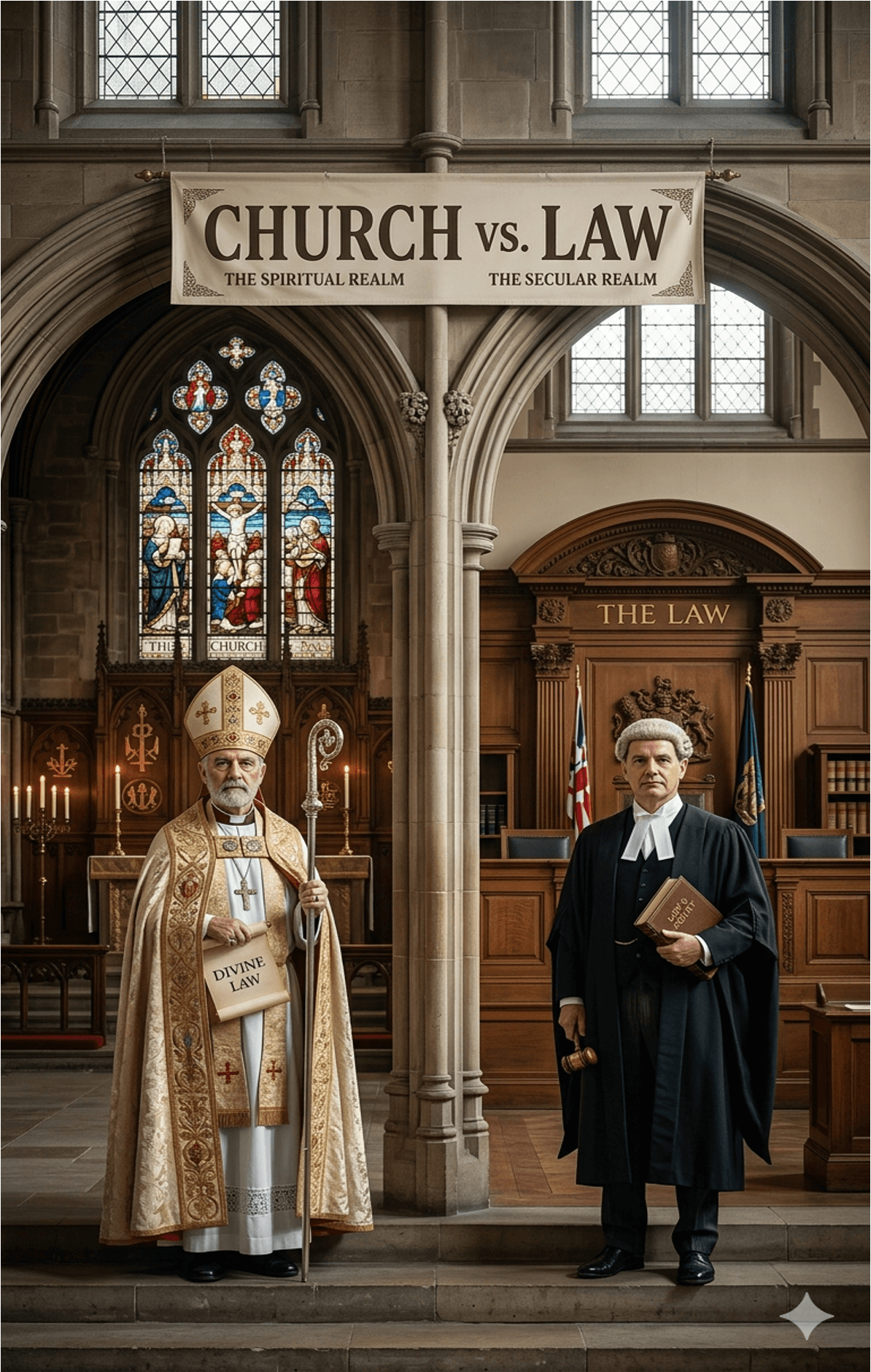
The relationship between religion and law has long been debated within democratic systems. While modern legal systems often emphasise secular governance, religion has historically played a central role in shaping legal institutions, moral framework and social norms. The premises of whether religion should have a voice in law is not just a contemporary policy issue but one deeply connected to the historical development of legal systems. From a historical perspective, religion has significantly influenced the moral and philosophical foundations of law, particularly within common law traditions inherited by Australia. Historically, law and religion were closely intertwined. Early legal systems often derived their authority from religious doctrine, with moral rules embedded within religious teachings forming the basis of social regulation. Western legal traditions were influenced by Christian moral teachings, which shaped societal expectations about acceptable behaviour, introducing legal systems and universal norms including; moral codes, such as prohibitions against murder, theft and dishonesty, that gradually evolved into criminal laws. Whilst these principles are now considered universal legal norms rather than religious mandates, their origins demonstrate the historical role religion played in forming legal frameworks. This article explores how religious principles have shaped Australian law throughout history. It also examines modern efforts to separate legal power in the Australian constitutional framework from religious authority and considers the balance between maintaining a secular legal system whilst respecting religious freedom and acknowledging religion’s historical influence on the law.
II RELIGIOUS PRINCIPLES AND THE HISTORICAL DEVELOPMENT OF AUSTRALIAN LAW MORAL AND LEGAL
Religion has played a significant role in shaping the moral and legal foundations of Australian law. Australia inherited the English common law tradition following British colonisation in 1788, and with it, a legal framework deeply influenced by Christian morals and values. Many early laws where consistent with Christian beliefs, including rules surrounding marriage, family life and moral conduct.[1] Marriage law provides a clear example of how religious influence historically shaped legal institutions in Australia. For much of Australia’s history, marriage was viewed as a religious and heterosexual union, reflecting a traditional Christian doctrine. The Marriage Act 1961 (Cth), which governed marriage for decades, defined marriage in terms consistent with this understanding. [2]
However, social attitudes and legal interpretations have evolved significantly over time. A notable example of this evolution is the legal recognition of same-sex marriage. In 2017, the Australian Parliament passed the Marriage Amendment (Definition and Religious Freedoms) Act 2017 (Cth), which amended the definition of marriage to ‘the union of two people’.[3] This reform followed a national postal survey in which a majority of Australians supported marriage equality.[4] The change reflects a broader shift within Australian society towards secular legal reasoning and equality principles. While religious institutions continue to maintain their own doctrinal definitions of marriage, Australian law now recognises marriage as a civil institution governed by the state rather than religious authority. The legislation of same-sex marriage demonstrates how modern Australian law has gradually moved away from religiously grounded legal definitions while still acknowledging the historical religious influence that shaped earlier legal frameworks.[5]
III SEPARATION OF LEGAL AUTHORITY AND RELIGION IN THE AUSTRALIAN CONSTITUTIONAL FRAMEWORK
Despite the historical influence of religion, Australia’s constitutional framework reflects a deliberate effort to separate legal authority from religious power. The most significant constitutional safeguard of this separation is found in s 116 of the Australian Constitution. This provision states that the Commonwealth shall not make laws establishing any religion, imposing religious observance, prohibiting the free exercise of religion or requiring a religious test for public office.[6]Section 116 reflects a commitment to ensuring that government authority remains independent from religious institutions, thereby preserving a secular legal system.
However, the High Court of Australia has interpreted s 116 relatively narrowly. In Adelaide Company of Jehovah’s Witness In v Commonwealth, the Court recognised that while religious freedom is protected, it is not absolute and may be limited where necessary to protect broader societal interests.[7] This case demonstrates that although religion is respected within the legal system, it does not hold governing authority over lawmaking. The Constitution therefore establishes an important distinction between respecting religious practice and allowing religion to control legal institutions.
Furthermore, Australia differs from some other Western democracies in that it does not possess a comprehensive national bill of rights. Instead, protections for religious freedom arise from a combination of constitutional provisions, legislation and common law principles.[8] This approach reflects Australia’s historical compromise between acknowledging religion’s cultural significance and maintaining the independence of the legal system from religious control. Modern constitutional interpretation therefore emphasises that laws should be created through democratic processes rather than religious doctrine.
IV BALANCING SECULAR LAW AND RELIGIOUS FREEDOM
The modern for Australian law lies in balancing two important principles: maintaining a secular legal system while respecting religious freedom and acknowledging the historical influence of religion to legal development. A secular legal framework ensures that laws operate independently of religious authority and apply equally to all citizens regardless of their personal beliefs. At the same time, democratic societies recognise religious freedom as a fundamental liberty that allows individuals to practise and express their beliefs without undue interference. As Australia becomes increasingly religiously diverse, the legal system must carefully navigate the tension between preserving neutrality in lawmaking and accommodating the legitimate rights of individuals to observe their faith.[9]
Australian law attempts to maintain this balance through a combination of legislative protections and judicial interpretation. Anti-discrimination legislation, for example, prohibits discrimination on the basis of religion while also allowing certain exemptions for religious organisations in limited circumstances.[10] These exemptions recognise that religious institutions may operate according to their beliefs while still functioning within the broader legal framework of a secular state.
The debate surrounding religious freedom has intensified in recent years, particularly following the legislation of same-sex marriage. Some religious organisations argued that stronger protections were necessary to ensure that individuals and institutions would continue to practise their beliefs without legal penalty.[11] In response, public discussion has focused on how to reconcile competing rights, including equality and religious liberty. This debate illustrates the ongoing tension between protecting individual freedoms and maintaining neutral legal institutions.
Ultimately, Australian law does not seek to eliminate religion from public life. Rather, it aims to ensure that religious belief does not determine the content of law for the entire population. The legal system therefore recognises religion as an important social and historical influence while ensuring that laws are grounded in democratic principles and applied equally across a diverse society.
V CONCLUSION
Religion has played an undeniable role in shaping the historical development of Australian Law. Many foundational legal principles emerged from moral frameworks that were strongly influenced by religious teachings, particularly within common law tradition inherited from Britain. However, the evolution of Australian society has led to a gradual shift towards a more secular legal system in which laws are created through democratic institutions rather than religious authority. The legislation of same-sex marriage demonstrates how modern legal reform can depart from historically religious conceptions of law while still respecting religious diversity. At the same time, constitutional protections such as s116 of the Australian Constitution ensure that religious freedom remains an important legal value. The challenge for contemporary Australian law is therefore not whether religion should have a voice in law, but how to maintain an appropriate balance between secular governance and respect for religious belief. By acknowledging religion’s historical contributions whilst preserving the independence of legal institutions, Australia continues to navigate the complex relationship between faith and law within a democratic framework.
VI REFERENCES
[1] Mark Hill, Russell Sandberg and Norman Doe, Religion and Law in the United Kingdom (Kluwer Law International, 2011) 5.
[2] Marriage Act 1961 (Cth).
[3] Marriage Amendment (Definition and Religious Freedoms) Act 2017 (Cth) sch 1.
[4] Australian Bureau of Statistics, Marriage Law Postal Survey, 2017 – Final Results (Media Release, 15 November 2017).
[5] Luke Beck, ‘The Constitutional Prohibition on Imposing Religious Observances’ (2017-18) 41(2) Melbourne university Law Review 493.
[6] Commonwealth of Australia Constitution Act s 116.
[7] Adelaide Company of Jehovah’s Witnesses Inc v Commonwealth (1943) 67 CLR 116.
[8] George Williams and David Hume, Human Rights under the Australian Constitution (Oxford University Press, 2nd ed, 2013) 23.
[9] The Oxford Companion to Australian Politics (Oxford University Press, 2nd ed 2013) 507-9.
[10] Sex Discrimination Act 1984 (Cth) s 37.
[11] Australian Law Reform Commission, Traditional Rights and Freedoms – Encroachments by Commonwealth Laws (ALRC Report No 129, 2015) 231.