Real Change or an Illusion? A Legal Commentary on Australia's World-First Social Media Ban
By Tanvi Shah
Published
Topic
Legal Commentary
See
Disclaimer: Views expressed herein are solely those of the author and do not necessarily reflect the views of other writers or the Law Student Review
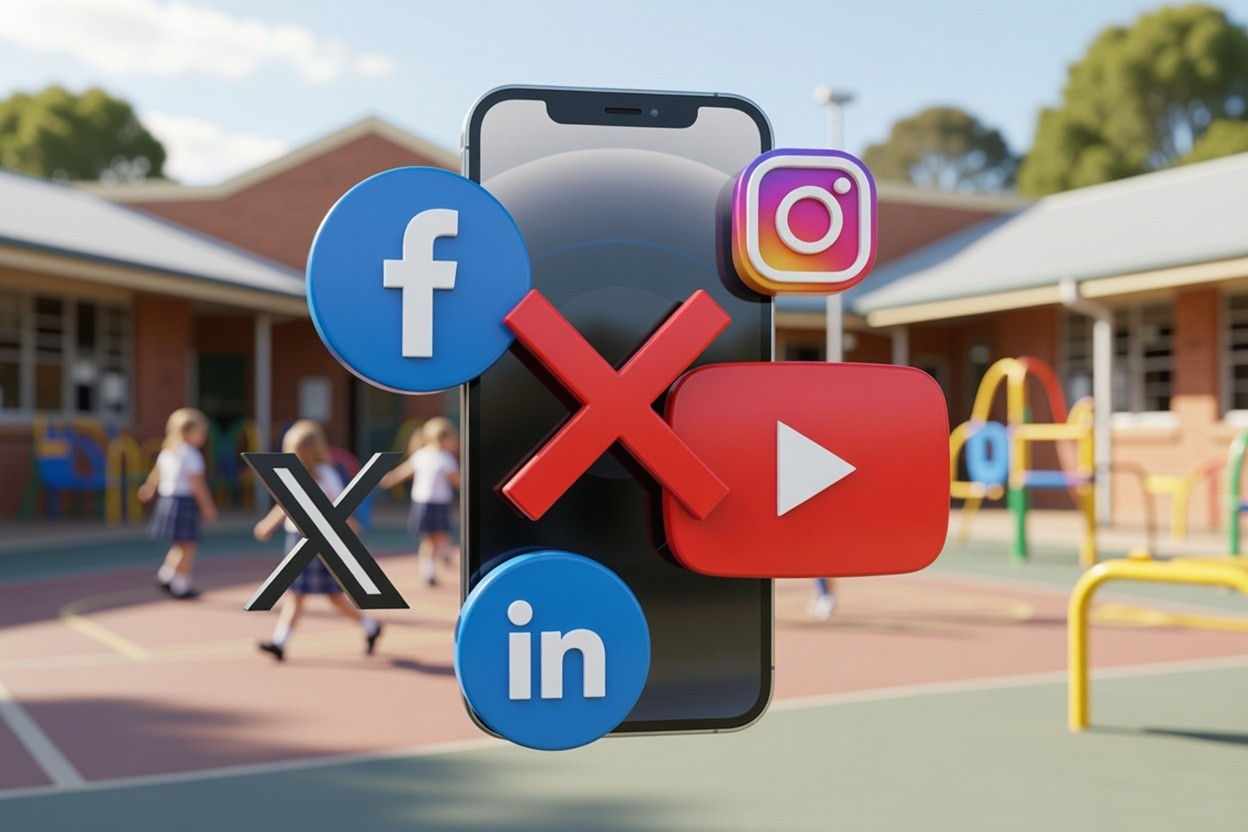
According to a 2022 headspace National Youth Mental Health Survey, 57% of young people believe their mental health is deteriorating, with 42% pointing to social media as the primary cause for this decline.[1] As eSafety Commissioner Julie Inman Grant stated in her address to the National Press Club in June last year, “The relationship between social media and children’s mental health is one of the most important conversations of our time.”[2] As part of this conversation, the Australian government recently passed legislation banning under-16s from creating or maintaining an account on certain social media platforms. Australia is the first country in the world to pass such a ban. So why did the Australian government choose to take this step?
It has been evident for quite some time that youth mental health is deteriorating since the advent of the Smartphone Revolution during the 2010s.[3] For example, the prevalence of psychological distress among people aged 18 and over has shown a steady increase since the 2010s. According to the Australian Institute of Health and Wellbeing (AIHW), in 2010 only 9.9% of the population were experiencing high or very high levels of psychological distress whereas in 2022-23 it doubled to nearly 20% (17%).[4] Moreover, cases of self-harm increased from 227 per 100,000 in 2007-08 to 344 per 100,000 in 2016–17 for young people aged 15-24.[5]
In essence, although it has not been scientifically proven that social media use directly causes mental health decline, the association between the two is clear. This is why the Australian government decided to take the step that it did. The Australian government’s purpose in implementing this ban is to “enhance the online safety and wellbeing of young people”.[6] By “delaying” under-16’s access to social media, the Australian government aims to provide children with the time to learn, build and equip themselves with the skills needed to stay protected online.[7] So how did this all come about?
In November 2024, the Australian government passed the Online Safety Amendment (Social Media Minimum Age) Act 2024. As of 10 December 2025, the new law requires age-restricted social media platforms to take “reasonable steps” to prevent under-16s from creating a new account or maintaining an old account on their platform.[8] Under the new law, if a platform fails to comply with their obligation to take “reasonable steps”, a court may order fines of up to 150,000 penalty units which is equivalent to $49.5 million AUD.[9] As is evident, the implications of failing to comply with this Minimum Age Restriction is serious. The social media platforms covered by the ban include Facebook, Instagram, TikTok, Snapchat, YouTube, X, Reddit, Threads, Kick, and Twitch.[10]
Although it is too early to comment on the long-term effectiveness of this ban, the initial impact is clear. Almost 4.7 million accounts were blocked or deactivated in the first couple days of the ban.[11] Although this is a great start, there've been reports of children under-16 still being able to use certain social media platforms covered by the ban. And the reports may surprise you. Two months into the ban, children like Adyan (14) report: "Probably around 10 per cent of [under-16s] actually have been banned, and half of that 10 per cent has been unbanned by just using basically the same thing that I did: use other people's faces, use their driver's licence. "Now, really, none of my friends are banned. Everyone has social media."[12] Other methods used by teenagers to circumvent the ban include asking an older sibling or adult to complete an ID scan for them, using VPNs or by simply taking advantage of Youtube and Tiktok’s logged-out viewing feature.[13] Moreover, the use of age verification technology demonstrates a potential risk to one’s right to privacy as questions arise over platforms’ use of sensitive data such as government-issued identity documents.[14]
Although this ban is largely supported by the Australian public as seen in the 77% of Australians supporting the ban,[15]criticisms against the ban exist. Former National Children's Commissioner Anne Hollonds and Human Rights Commissioner Lorraine Finlay expressed their reservations about the social media ban. According to them, the ban fails to resolve the real safety issues on platforms themselves. According to them, the ban fails to address the root cause of online harm such as deceptive design features aimed at driving constant consumption of content even if graphic or violent.[16]. Damini Satija, the Programme Director at Amnesty Tech raises a similar critique. Satija argues that the ban is an ‘ineffective quick fix’ which will not prevent online harms from occurring.[17] This is because the ban fails to address the root problem of inadequate safety on platforms. Satija believes that the government should impose rules on social media platforms themselves. The government must pressure platforms to take the right steps which is to regulate their content and ensure it is safe for children to consume.[18] Additional support for this argument is seen in an article published in Child and Adolescent Mental Health. It is argued that the focus needs to be on strictly regulating platforms and holding them accountable for digital safety on their platform.[19] Another article published in The Health Promotion Journal of Australia argues a similar point. It is argued that a ‘standalone ban’ risks diverting attention from platforms’ responsibility to ensure their digital (or online) environment is safe for children.[20]
But this criticism merely touches the surface. Let’s go deeper. Hollonds and Finlay discuss the human rights implications of this ban. According to them, this ban violates children’s right to freely express themselves and right to access information (Article 13 Convention on the Rights of a Child ‘CROC’).[21] An Australian Human Rights Commission (AHRC) submission suggests that this ban may also violate Article 17 of CROC which obliges governments to ensure children are able to access information from a variety of sources aimed at promoting their wellbeing and health.[22] The AHRC submission highlights social media’s important role in providing access to diverse perspectives, global news and other learning opportunities.[23] Social media is valuable for its ability to educate children on a variety of important topics such as health, wellbeing and safety. Moreover, social media acts as an easily accessible platform for everyone to express their views, perspectives and ideas. It acts as a platform for both local and global dialogue and provides the opportunity to participate in a range of social and cultural activities.[24] Satija agrees on the benefits of social media. Satija argues that social media’s ability to foster inclusion and connection in both a local and global context is beneficial for children’s mental health.[25] Additionally, Satija argues that the government failed to recognise teenagers as ‘political actors’ who use social media to not only inform their political views but also to shape political discussions.[26] Hence, by implementing this ban, the Australian government failed to appreciate the valuable opportunities social media provides for children to learn, grow and express themselves.
Another criticism of the ban is that it ignores the needs of those vulnerable in our society - marginalised and remote communities. According to Hollonds and Finlay, social media may provide remote communities with potentially ‘life-saving resources and information’.[27] Moreover, an article in the Medical Journal of Australia reported that the ban may unintentionally contribute to the increased marginalisation of minority groups (e.g. remote communities, people with disabilities) as an important source of connection and belonging is removed from them.[28] An article published in The Lancet supports this argument as it is argued that the ban limits marginalised communities’ ability to receive and provide social support to one another.[29] According to the article, a review found that social media greatly benefitted the mental health of LGBTQ+ youth through providing opportunities for peer connection and self-exploration.[30]
So you may be wondering: What do critics of the ban propose instead? In line with the recommendation of a Parliamentary Committee examining the impact of the social media ban, Hollonds and Finlay believe imposing a Digital Duty of Care on tech companies is a better approach than a standalone ban.[31] You will be happy to hear that this is something the Australian Government is currently in the process of legislating. Moreover, Hollonds and Finlay emphasise the importance of education on digital literacy and online safety in schools. Education is vital as it will equip children with skills such as critical thinking to stay safe online.[32] Satija agrees with this as she argues that the government must ‘empower’ children with the skills and tools to navigate social media safely.[33]
An article in Child and Adolescent Mental Health adopted a public health policy lens to suggest a harm minimisation approach is more effective than standalone prohibition. This approach aims to mitigate the risks of online harm through education and skill-building.[34] This stands in stark contrast to the ‘prohibition’ approach of the Australian government which fails to embrace the positive benefits of social media. This is supported by an article in the Medical Journal of Australia which argues for the implementation of comprehensive social media use guidelines for young people. Such guidelines could assist adolescents to use social media in a manner supportive of their health, wellbeing and safety.[35] An article published in the Health Promotion Journal of Australia agrees with this focus on education rather than restriction. It argues that both policymakers and platforms need to provide high-quality educational content to allow children to exercise greater autonomy and control over their online experience.[36] If children are equipped with online safety skills, children can more easily identify potential traps online e.g. targeted advertising, scams, etc. and thereby better protect themselves from harm. Several articles also emphasise the importance of educating parents/caregivers on the risks and benefits of social media so that they can better support their children manage their increasingly digital lives.[37] Hence, education of both the youth and parents/caregivers on digital literacy and online safety is an extremely important area the Australian government failed to legislate on.
Although eSafety Commissioner Julie Inman Grant in her address to the National Press Club placed a lot of emphasis on the importance of education and online safety skill-building, the truth is, a nation-wide curriculum change requiring online safety education is not mandated by the new law. The eSafety Commissioner merely recommends under-16s to use the vast resources available through eSafety to educate themselves on online safety.[38] Although the government’s intent is clear, hoping young children will take the steps to educate themselves is not going to yield long-term harm minimisation. The Australian government must mandate online safety education in schools and pass it as a law. This may yield long-term harm minimisation compared to a standalone ban which as Satija aptly stated, “... [is] out of step with the realities of a generation that lives both on and offline.”[39]
So where are we at right now? Well, the social media ban is still in place. But in late November, two 15-year old teenagers Noah Jones and Macy Neyland backed by the Digital Freedom Project filed proceedings against the federal government in the High Court challenging the the new law. The group argues that the law is unconstitutional as it “places a heavy burden on [the implied freedom of] political communication”.[40] The implied freedom of political communication operates as a limit on legislative and executive power so that the government cannot pass laws which restrict people’s ability to freely communicate about government and politics.[41] In relation to this, Macy Neyland calls young people the "voters of tomorrow" who deserve to both express their views and engage in political discourse online. The submissions of the group also highlighted the failure of the new law to reform the design features of social media responsible for causing harm.[42] As Noah Jones said, "We're disappointed in a lazy government that blanket bans under-16s rather than investing in programs to help kids be safe on social media."[43] As of now, this case is yet to be heard before the High Court.
In conclusion, the social media ban is a much-needed step but is not sufficient on its own. The Government must implement a Digital Duty of Care as soon as practicably possible to ensure that social media platforms themselves are safe to spend time on. Not only that, but the Government also needs to work closely with adolescents, parents/caregivers and schools to provide relevant, high-quality education to equip our nation’s children with the skills to protect themselves online.[44]
FOOTNOTES
[1] Headspace, ‘Young people cite social media as main reason for worsening mental health’, (Web page, 09 May 2022) <https://headspace.org.au/our-organisation/media-releases/young-people-cite-social-media-as-main-reason-for-worsening-mental-health/>.
[2] Julie Inman Grant, ‘Swimming between the digital flags: helping young Australians navigate social media’s dangerous currents’, eSafety Commissioner (Web page, 24 June 2025) <https://www.esafety.gov.au/newsroom/blogs/swimming-between-the-digital-flags-helping-young-australians-navigate-social-medias-dangerous-currents>.
[3] 10 News, ‘Chilling Warning For Parents As MRI Scans Show Phones Are Damaging Kids' Brains’ (YouTube, 02 February 2026) 00:02:22-00:02:32 <https://www.youtube.com/watch?v=EPqItSmEaFE&t=160s>.
[4] Australian Institute of Health and Welfare, ‘National Drug Strategy Household Survey 2022–2023: Mental health and use of alcohol, tobacco, e–cigarettes and other drugs’, (Web page, 29 February 2024) <https://www.aihw.gov.au/reports/mental-health/mental-health-alcohol-drugs>.
[5] Australian Institute of Health and Welfare, ‘Australia's youth: Mental illness’, (Web page, 25 June 2021) <https://www.aihw.gov.au/reports/children-youth/mental-illness>.
[6] Explanatory Memorandum, Online Safety Amendment (Social Media Minimum Age) Bill 2024 (Commonwealth), 9 <https://parlinfo.aph.gov.au/parlInfo/download/legislation/ems/r7284_ems_b9c134ac-a19a-47b2-9879-b03dda6e3c1a/upload_pdf/JC014726.pdf;fileType=application%2Fpdf#search=%22legislation/ems/r7284_ems_b9c134ac-a19a-47b2-9879-b03dda6e3c1a%22>.
[7] ‘Swimming between the digital flags’ (n 2).
[8] eSafety Commissioner, ‘Social media age restrictions’, (Web page, 13 January 2026) <https://www.esafety.gov.au/about-us/industry-regulation/social-media-age-restrictions>.
[9] Ibid.
[10] Ibid.
[11] Clare Armstrong, ‘More than 4.7m social media accounts closed in two days after ban began, data reveals’, ABC (online), (online at 15 January 2026) <https://www.abc.net.au/news/2026-01-15/social-media-ban-data-millions-of-accounts-closed/106232768>.
[12] Cale Matthews, ‘Two months since the social media ban began and teens say it isn't working’, ABC (online), (online at 5 February 2026) <https://www.abc.net.au/news/2026-02-05/social-media-ban-do-under-16s-think-it-is working/106304064?utm_source=abc_news_app&utm_medium=content_shared&utm_campaign=abc news_app&utm_content=mail>.
[13] Ibid.
[14] Lorraine Finlay and Anne Hollonds, ‘Australian parents and kids deserve better’, Australian Human Rights Commission (Web page, 26 November 2024) <https://humanrights.gov.au/about-us/media-centre/opinion-pieces/opinion-pieces/australian-parents-and-kids-deserve-better>.
[15] YouGov, ‘Support for under-16 social media ban soars to 77% among Australians’, (Web page, 26 November 2024) <https://au.yougov.com/politics/articles/51000-support-for-under-16-social-media-ban-soars-to-77-among-australians>.
[16] ‘Australian parents and kids deserve better’ (n 14).
[17] Amnesty International, ‘Australia: Social media ban for children and young people an “ineffective quick fix” that will not prevent online harms’, (Web page, 9 December 2025) <https://www.amnesty.org/en/latest/news/2025/12/australia-social-media-ban-for-children-and-young-people-an-ineffective-quick-fix-that-will-not-prevent-online-harms/>.
[18] Ibid.
[19] Katrina E. Champion et al., ‘Debate: Social media in children and young people – time for a ban? Beyond the ban – empowering parents and schools to keep adolescents safe on social media’ (2025) 30(4) Child and Adolescent Mental Health 411, 412.
[20] Nicholas Carah et al., ‘Beyond banning: Our digital world must be made safer for young people’ (2025) 36(1) Health Promotion Journal of Australia, 1.
[21] ‘Australian parents and kids deserve better’ (n 14).
[22] Australian Human Rights Commission, ‘Explainer: Proposed Social Media Ban for Under-16s in Australia’, (Web page, 21 November 2024).
[23] Ibid.
[24] Ibid.
[25] ‘Social media ban for children and young people an ineffective quick fix’ (n 17).
[26] Ibid.
[27] ‘Australian parents and kids deserve better’ (n 14).
[28] Ivana Stankov et al., ‘A precautionary approach to social media: protecting young minds in an evolving digital world’ (2025) 223(5) Medical Journal of Australia 230.
[29] Jasmine Fardouly, ‘Potential effects of the social media age ban in Australia for children younger than 16 years’ (2025) 7(4) The Lancet Digital Health e235.
[30] Ibid.
[31] ‘Australian parents and kids deserve better’ (n 14).
[32] Ibid.
[33] ‘Social media ban for children and young people an ineffective quick fix’ (n 17).
[34] ‘Debate: Social media in children and young people’ (n 19).
[35] ‘A precautionary approach’ (n 28).
[36] ‘Beyond banning’ (n 20).
[37] ‘Debate: Social media in children and young people’ (n 19).
[38] ‘Swimming between the digital flags’ (n 2).
[39] ‘Social media ban for children and young people an ineffective quick fix’ (n 17).
[40] Luke Beck, ‘Two teens have launched a High Court challenge to the under-16s social media ban. Will it make a difference?’, The Conversation (online), (online at 27 November 2025) <https://theconversation.com/two-teens-have-launched-a-high-court-challenge-to-the-under-16s-social-media-ban-will-it-make-a-difference-270688>.
[41] Victorian Government Solicitor's Office, ‘The implied constitutional freedom of political communication’, (Web page, 01 September 2020) <https://www.vgso.vic.gov.au/implied-constitutional-freedom-political-communication>.
[42] Elizabeth Byrne and Jade Toomey, ‘High Court agrees to hear teenagers' challenge to under 16s social media ban’, ABC (online), (online at 4 December 2025) <https://www.abc.net.au/news/2025-12-04/court-agrees-hear-teens-challenge-to-under-16-social-media-ban/106103338>.
[43] Clare Armstrong, ‘Social media age ban faces High Court challenge as government declares it will not be 'intimidated' by legal threats’, ABC (online), (online at 26 November 2025) <https://www.abc.net.au/news/2025-11-26/australia-social-media-ban-faces-legal-challenge/106056528>.
[44] ‘Debate: Social media in children and young people’ (n 19).