Australian Competition and Consumer Commission v Fewstone Pty Ltd [2025] FCA 1636
A Case Summary
Published
Topic
Case Summaries
See
Disclaimer: Views expressed herein are solely those of the author and do not necessarily reflect the views of other writers or the Law Student Review
I BACKGROUND
● Fewstone Pty Ltd trades as City Beach.
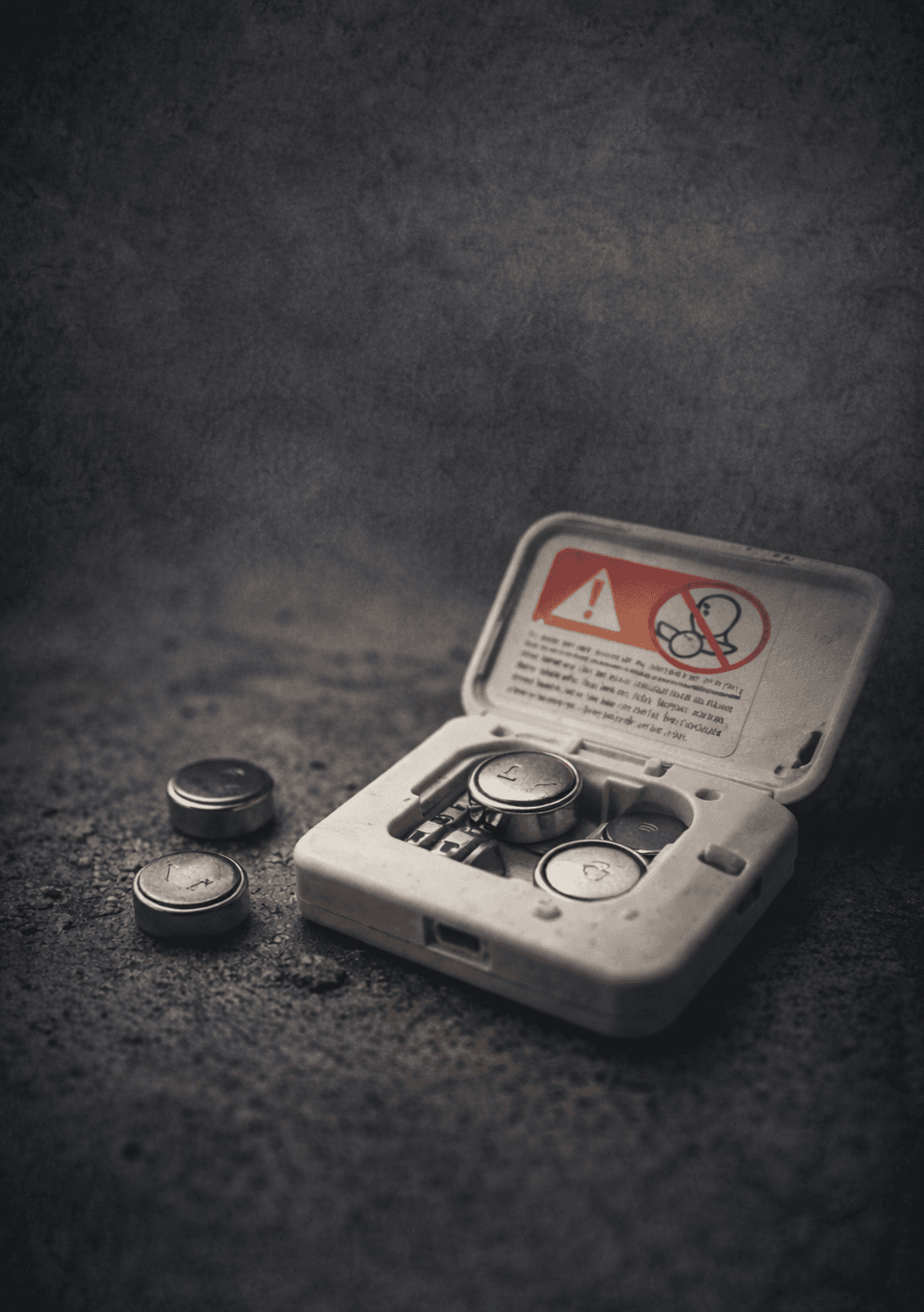
● Following the deaths of three Australian children from swallowing button batteries, National Button Battery Safety Standards were introduced in 2020 and commenced on 22 June 2022 after an 18 month transition period.
○ One standard requires products to have secure battery compartments[1]
○ Another standard requires safety warnings to be provided with products containing button batteries[2]
II FACTS OF THE CASE
City Beach received supplier warnings about non-compliant products from May and June, 2022, but staff failed to escalate the issue to management or implement company-wide compliance.[3] Between September 2022 and October 2023, City Beach received multiple warnings from NSW and Queensland Fair Trading that its button battery products were non-compliant with mandatory standards. In each instance, individual stores removed or addressed the specific products identified. However, these warnings were not escalated to senior management, and no company-wide compliance measures were implemented.[4]
Prior to August 2023, City Beach had no systems, processes, or policies in place to ensure compliance with mandatory safety standards. It failed to track products, train staff, escalate regulatory warnings, or implement safeguards to prevent non-compliant sales. In August 2023, the ACCC contacted City Beach about possible non-compliance with button battery safety laws. This was the first time senior management realised they had legal obligations. City Beach then reviewed its products, admitted some were non-compliant, apologised, removed them from sale, and began working with the ACCC toward a product recall.[5]
Following further direction from the ACCC in February 2024, City Beach initiated a voluntary recall in March 2024. It subsequently complied with reporting requirements and implemented extensive notification measures, including social media campaigns, emails to customers, and online recall information.[6]
Throughout 2024 and early 2025, City Beach continued to identify additional non-compliant products that had not previously been disclosed to the ACCC, due to inadequate internal systems. Despite implementing a recall and measures to prevent further sales, non-compliant products were still sold after the recall due to store-level failures and system errors. City Beach updated its recall and provided further information to the ACCC as new issues were discovered.[7]
In September 2025, City Beach discovered that a non-compliant product had been sold in August 2025, despite earlier recall measures. This occurred because a system update removed the point-of-sale block preventing such sales, and City Beach failed to detect the error. The issue was later rectified.[8]
While there have been no reported injuries or actual harm caused by any of the non-compliant products sold by City Beach, their unlawful conduct put more than 50,000 young children at risk of severe injury or death.[9]
III LEGAL ISSUES
The issue before the court was whether the appropriate penalty for City Beach’s admitted contraventions of ss 106 and 136 of the Australian Consumer Law[10] on over 50,000 occasions[11] was $14 million[12] as the ACCC submitted it should be or the $3.15 million City Beach claimed it should be.[13]
IV DECISION
Downes J agreed with the ACCC’s submission that the appropriate penalty is $14 million.[14]
The Court justified the ACCC’s submission on the basis that general deterrence is an overarching objective of pecuniary penalties in civil cases.[15] This was justified by Australian Building and Construction Commissioner v Pattison.[16]Further leading the Court to favour the ACCC’s submission was the need for the penalty to not be so low as to be regarded as a “cost of doing business”.[17] The Court further justified this decision based on the large scale and duration of the conduct, which involved the supply of over 54,000 products that failed to comply with safety standards and over 56,000 that failed to comply with information standards over a period of approximately two years.[18] The Court reasoned that the penalty suggested by the ACCC reflects the legislature's clear intention that breaches of mandatory safety standards are serious and therefore must attract significant sanctions, underpinned by s224 (3A) of the ACL.[19]The Court’s identification of the aggravating factors, specifically the absence of any systems being in place prior to the detection of the contraventions to ensure compliance with the ACL, the failure of staff to escalate serious compliance issues to senior management when those were notified to City Beach, the continued sale of products after the ACCC raised its concerns with senior management, and the continued sale of products after the delayed issuing of recall notices, led to the conclusion that City Beach failed to appreciate the manner in which its conduct put children at risk of physical harm.[20]
The Court did not accept City Beach’s argument that the $14 million penalty is “excessive and oppressive”[21] as it is important to ensure that City Beach and other retailers are properly deterred from neglecting to comply with the requirements of the Mandatory Standards so as to ensure the safety of children.[22]
V IMPLICATIONS OF THE DECISION
Prior to the case, the ACCC has addressed breaches of Button Battery standards by issuing infringement notices and accepting court enforceable undertakings for compliance commitments.[23]
The decision in the case confirms what ACCC Commissioner Luke Woodward stated following the decision; “businesses and suppliers that {fail} to meet safety standards for button batteries … can result in serious penalties”.[24]
However, on the 10th of February, 2026, Fewstone applied to appeal the decision.[25]
REFERENCES
[1] Consumer Goods (Products Containing Button Batteries Safety Standard 2020).
[2] The Consumer Goods (products Containing Button Batteries) Information Standard 2020.
[3] The Case [14-16].
[4] Ibid [17-24].
[5] Ibid [25 - 30(7)].
[6] Ibid [31 - 32(5)].
[7] Ibid [33 - 44].
[8] Ibid [45 - 48].
[9] Ibid [54 - 55].
[10] Schedule 2, Competition and Consumer Act 2010 (Cth) (“ACL”).
[11] Ibid [59 - 60].
[12] Ibid [91].
[13] Ibid [150].
[14] Ibid [170].
[15] Ibid [152].
[16] [2022] HCA 13.
[17] The Case [152].
[18] Ibid [154].
[19] Ibid [156].
[20] Ibid [157].
[21] Ibid [150].
[22] Ibid [162].
[23] See for example: ACCC Tesla pays penalties for alleged breach of button battery safety standards, Media Statement, 12 October 2023 and ACCC, Hungry Jacks pays penalties for supplying toys with its children's meals that allegedly breached the mandatory safety standard for button batteries, Media Statement, 5 May, 2025 and ACCC, The Wiggles admit Emma Bow headband likely breached consumer law and commit to raise awareness, Media Release, 11 November 2025.
[24] ACCC City Beach ordered to pay $14 million in penalties for supplying non-compliant button battery products Media Statement, 22 December, 2025.